Free and fair media for a democratic Hungary
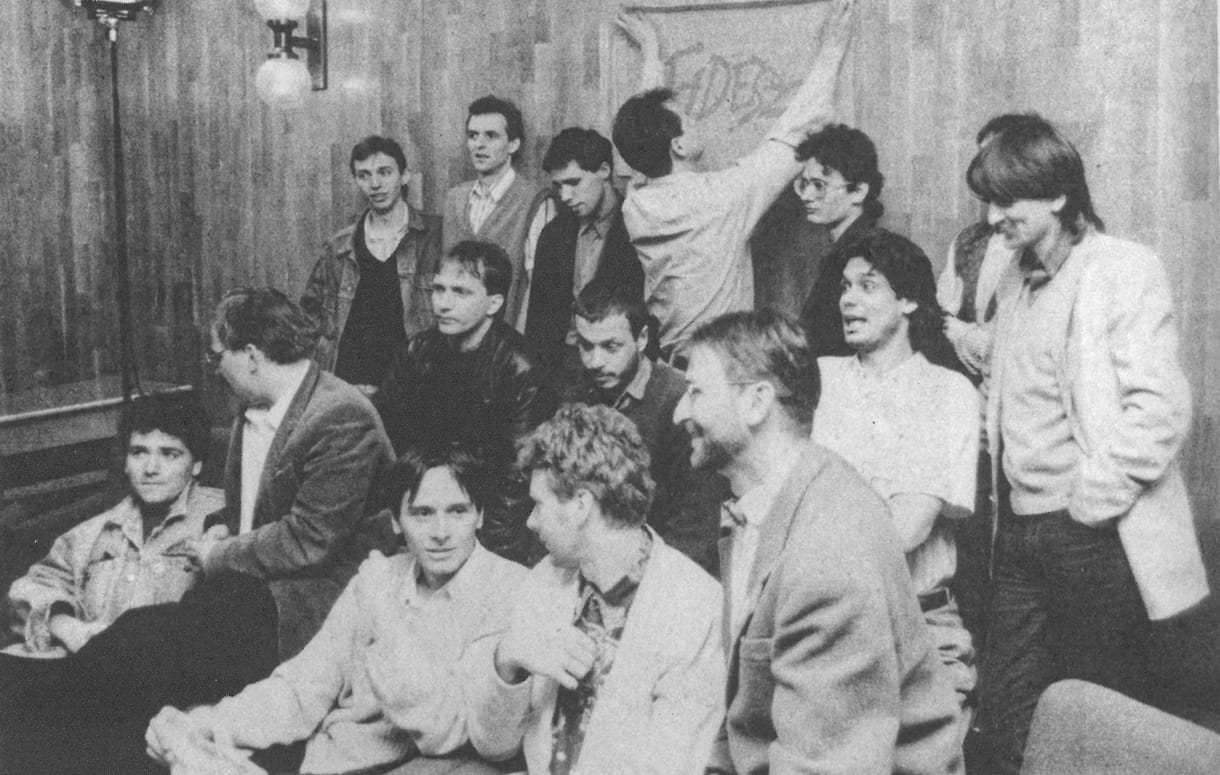
As the Berlin wall collapsed in 1989, the Rafto Human Rights Prize was awarded to a political party started up one year earlier in Hungary, the Hungarian Civic Alliance Fidesz.
Fidesz represented the third attempt to establish democracy in Hungary, after the short-lived democratic republic of 1918-19, and the failed rebellion against communist rule in 1956. The young activists in Fidesz and other democrats proved successful in their historical ambition for a while, until Hungary under Fidesz rule was relegated from a liberal to an electoral democracy in 2010, and then from an electoral democracy to and electoral autocracy in 2019.
The first moves from a liberal towards an authoritarian ideology was made by Fidesz after the selection of Viktor Orbán as its First President in 1993, shedding many of the co-founders and supporters of the party while gaining new supporters with a more conservative mindset. Orbán would lead the party for 33 years, the last sixteen as an increasingly autocratic Prime Minister of Hungary.
Fidesz was represented at the award ceremony in Bergen in 1989 by founding member Péter Molnár, then a friend of Orbán, and later among the liberal-minded members who left the party in the mid-nineties. The Rafto Foundation has kept in touch with him ever since, waiting for the day when Hungary was ready to turn back towards democracy. This day finally came on April 12, when the Tisza party led by Péter Magyar, another changemaker originating from Fidesz, won the election in Hungary with a supermajority allowing for constitutional change and a return back to Europe and democracy.
Among the many discussions that should take place soon in Hungary are those needed to reform Hungarian media laws in order to secure that as many voices in Hungarian society as possible are heard and given a fair opportunity to reach a significant audience and together restore a democratic public space. Below you will find a contribution to this discussion written by Péter Molnár, who returns to his roots and the work he once did as part of the original Fidesz movement.
The restoration of limiting power in Hungary
By Peter Molnar, representing the original Fidesz as Rafto Laureate of 1989
In 1988, 38 years ago, we founded Fidesz primarily to ensure that no one would have too much power. In the April 12 elections, the Tisza Party represented this original Fidesz goal.
I do not call the ruling party now on its way out “Fidesz“, primarily because by centralizing power it has turned against Fidesz’s original goal. As a member of the original Fidesz leadership, I know this: at the end of four decades of communist dictatorship, limiting power was our most fundamental goal.
The regime change of 1989–90 was a cathartic moment ripe for constitution making that would limit power. After the era of autocracy, the overwhelming majority of society wanted to ensure that no one would have too much power again.
This goal was served by the creation and protection of constitutionally anchored institutions that limit power, including a free press. The Hungarian system of freedom established at that time, which limited the power of anyone, was protected by the rule that this system could only be amended by a two-thirds majority in the National Assembly.
The task and purpose of a two-thirds parliamentary majority can only ever be to maintain and strengthen the limitation of power. Between 1994 and 1998, the government of the Hungarian Socialist Party MSZP and the Alliance of Free Democrats SZDSZ, which held a 72 percent majority in the National Assembly, strove to do just that. At that time, as a member of the National Assembly, I led the SZDSZ’s culture and media working group. Between 1990 and 1993, I had represented Fidesz in parliament in these areas.
In the media law passed in late 1995, long before the advent of the internet, we did not enact regulations to ensure the government’s influence through a two-thirds majority. Rather, we sought to prevent any governing majority, and any other group in society, from exerting decisive influence over the operations of radio and television stations.
According to the law passed in cooperation with the opposition parties, half of the members of the bodies overseeing the operation of public radio and television, as well as the body deciding on the allocation of radio and television frequencies, were selected by the parliamentary opposition of the time, which then held only 28 percent of the seats.
This law, which limited the power of any governing majority, was also protected by the rule that it could only be amended by a two-thirds majority in the National Assembly. This protection was sufficient until 2010, when, after 12 years, a two-thirds majority returned to the National Assembly. The successor party to the original Fidesz did not use its two-thirds majority to strengthen or even maintain the limits on power. It established a Media Council whose members were all selected by them.
The most fundamental Hungarian conservative value is freedom of the press. “We demand freedom of the press and the abolition of censorship”—so reads the first of the 12 demands drafted by some young leaders of the Hungarian revolution and freedom fight in 1848. “Freedom of the press, only this to us! It is such a great, such an almighty verb”—wrote in 1847, one of the most iconic Hungarian poets Sándor Petőfi in his poem “To the National Assembly.”
Yet the successor party to the original Fidesz, which has been unthinkingly labeled conservative, used its two-thirds parliamentary majority to centralize power, also at the expense of freedom of the press.
Between 1994 and 1998, with a two-thirds parliamentary majority, we had to maintain and further develop the system of checks and balances. With a two-thirds majority in the National Assembly, the Tisza Party must restore these checks and balances. And it must strengthen the protection of the restored system of checks and balances, including by limiting the prime minister’s term of office to eight years.
Freedom of the press must be restored first and foremost, including with regard to public radio and television. These institutions must provide a forum for meaningful, objective debates between the government and the opposition, as well as for the broadest possible, diverse public discourse. They must contribute to ensuring that, in a self-governing community of equal and free individuals, we can speak out on public affairs without fear, and thereby become co-authors of democracy. This co-authorship is also necessary as it can strengthen the social consensus that considers the exclusion of anyone’s excessive power to be indispensable.
Contact
Iver Ørstavik
Senior Advisor| Means of contact | Contact details |
|---|---|
| Phone: | +47 47096755 |
| E-mail: | iver.orstavik@rafto.no |