Five years of the Code of Conduct: Progress, though challenges remain for seafarers’ rights and welfare
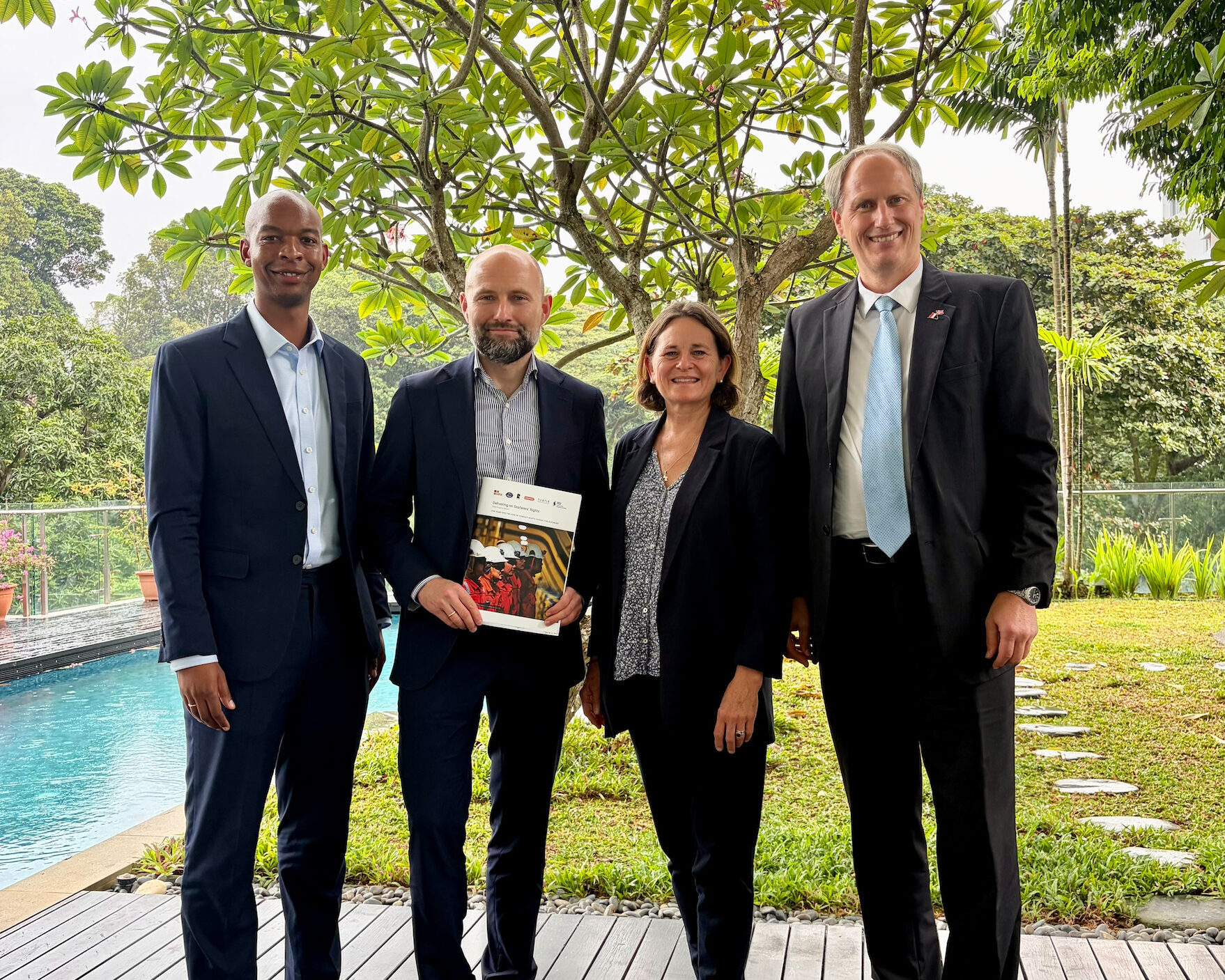
The Delivering on Seafarers’ Rights: 2026 Progress Report was launched in Singapore last week. Five years after the Code of Conduct for seafarers’ rights was introduced, the report highlights measurable progress across the shipping industry, while also showing that many seafarers have yet to experience improvements in their working and welfare conditions.
The launch was hosted by the Norwegian Embassy in Singapore, alongside IHRB and the Rafto Foundation, represented on site by Executive Director, Jostein Hole Kobbeltvedt. The Rafto Foundation co-developed the Code of Conduct in 2021, together with IHRB and the Sustainable Shipping Initiative. The Code aims to promote responsible practices that safeguard seafarers’ rights and welfare across the shipping industry. Today, the Rafto Foundation also serves as a co-author of the progress report.
During the event, it was highlighted that seafarers currently face growing human rights and safety challenges linked to war, conflict, and ongoing maritime risks.
Francesca Fairbairn, Shipping Lead at IHRB, emphasized the urgency of industry-wide action: “We need to close the gap between the good players and the long tail of the industry so that seafarers’ rights are respected right across the board.”
Disconnect between corporate reporting and reality at sea
More than 1 000 companies have completed the Crew Welfare Self-Assessment (CWSA), covering over 13 000 vessels and roughly 300 000 seafarers. By evaluating company reporting alongside direct seafarer feedback, the report reveals a persistent disconnect between corporate claims and daily seafaring experiences.
The report also shows that several actors across the shipping industry have taken important steps to strengthen seafarers’ rights and welfare. At the same time, surveys of seafarers indicate that these improvements are not reaching everyone.
For example, while 90 percent of companies in the self-assessment achieved high standards in “fair terms of employment”, 76 percent of surveyed seafarers reported that their wages were always paid correctly, in full and on time. Furthermore, only 59 percent of surveyed seafarers felt safe raising a serious concern without fear of retaliation, and just 49 percent reported having enough crew on board to work safely without excessive fatigue.
Seafarers participating in the report’s workshops highlighted the pressure of living between paperwork and practice: “On the paperwork, your rest hours are complete. But in reality, you are beaten down by work.” “If you total the overtime, it can reach more than 200 hours, but only around 120 hours are recognized by the principal. The rest of your overtime is just thank you hours.” (The Mission to Seafarers workshop, 2026).
Scaling up good practice across the fleet
The report underlines that the key priority for the next five years must be scaling up best practices from industry leaders so that high standards reach every seafarer. In particular, it calls on charterers, cargo owners, insurers, financial institutions, regulators and flag states to incorporate seafarer welfare into their commercial and regulatory decisions.
Read the full report from the Sustainable Shipping Initiative here.
Contact
Jostein Hole Kobbeltvedt
Executive Director| Means of contact | Contact details |
|---|---|
| Mobil: | +47 92066025 |
| E-post: | jostein.hole.kobbeltvedt@rafto.no |